

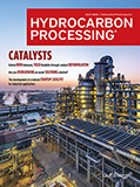
Process Optimization
Enhancing refinery profitability with a novel offgas conversion technology
The refining industry is challenged every day to optimize product slates that comply with market demand, product specifications, environmental regulations and refining-petrochemical integration, all while remaining profitable.
An optimized approach to choosing solvent for the liquid-liquid extraction process
Liquid-liquid extraction (LLE) is a traditional method used for separating a specific component (solute) from the carrier liquid phase.
Speed up the development of new commercial adsorbents—Part 1
In the conventional development approach, a multi-stage process begins in the laboratory, moves to the pilot plant, and ends at the commercial unit, often before any financial benefits are realized.
Energy losses from the radiant firebox wall of pyrolysis furnaces
The steam cracking unit is highly energy demanding, requiring high-severity pyrolysis furnaces to break the carbon-carbon bonds, as well as high pressure for the purification of its products.
Business Trends: Rejuvenating the contract “spine” of megaprojects—Part 1
Business executives and project managers are grappling with challenging business environments and a 20-yr legacy of failing megaprojects.
Digital: Operational excellence index—Part 2: The digital transformation
Without a doubt, digitalization is the engine fueling the growing adoption of operational excellence (OE) in hazardous industries.
Viewpoint: Digitalization is key to increasing the process industry’s productivity
Consumers are continuously looking for healthier, safer and more environmentally sustainable products.
Cost-effective revamp of CO2 removal systems
The cost-effective revamp experiences of carbon dioxide (CO<sub>2</sub>) removal systems in three different ammonia plants, and the resulting attractive payback of just a few months are detailed here.
Flexibility in desalting operations for opportunity crudes
Typically, opportunity crudes require more rigorous desalting to yield high-quality products due to high levels of naphthenic acids, basic sediment and water (BS&W) and filterable solids, among others.
Dynamic simulation of integrated syngas, O2 and steam networks for a gasification complex—Part 2
Reliance Industries Ltd. (RIL) operates the world’s largest refinery complex, with a combined crude processing capacity of 1.24 MMbpd that is split between two refineries: a Domestic Tariff Area (DTA) refinery and a Special Economic Zone (SEZ) refinery in Jamnagar, India.
- Air Canada and Airbus launch joint initiative to scale domestic Canadian SAF 8/3
- Purdue Biofuels Consortium to bring biodiesel and ethanol blends to diesel engines 8/3
- Convertus closes on $135-MM financing for flagship biofuel facility in Ontario, Canada 8/3
- New process turns mixed plastic waste into hydrogen fuel without sorting 8/3
- Amogy and 2G Energy successfully demonstrate integrated ammonia-to-power generation with natural gas multi-fuel capability 8/3
- India's Essar Group plans $5.8 B energy transition investment in UK 8/3