

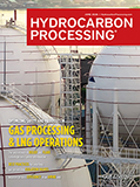
Information Systems
Achieve refinery cost savings with real-time hydrogen monitoring
As stay-at-home orders and state mandates to shelter in place made waves around the globe in early 2020, nearly every industry was severely impacted by the COVID-19 pandemic.
Editorial Comment: Optimizing operations by advancing process controls, instrumentation and automation technologies
When driving by or visiting a refinery or petrochemical plant, one cannot help but gaze at the expansive sea of metal towers.
Creating a roadmap for professional skills in Industry 4.0
The oil and gas industry has overcome many challenges by keeping up with technology advances, achieving cost-effective practices and meeting energy efficiency requirements.
Extracting business value from digitalization in oil and gas
Most oil and gas companies are investing in digitalization; however, they often fail to move beyond proof of value (PoV) or pilot projects.
Increase uptime by reducing systematic failure risk
Pondering the history of industrial incidents, it would be incorrect to assume that most failures occur randomly.
Achieve process safety, asset integrity and reliability with an integrated HAZOP study
Abnormal situations in refining and petrochemical plant operations can interfere with plant reliability and efficient operations, especially for highly complex processes.
Optimize flare gas recovery system design to reduce emissions
Emissions from flares worsen air quality and produce waste gas. A flare gas recovery system is designed to facilitate CO<sub>2</sub> reduction.
Digital: Enable reliable operations in a volatile oil and gas market
Hydrocarbon processing businesses increase profitability and survivability by optimizing production and/or reducing expenses to maximize profitability—or in the extreme, cash flow.
Automation: Significant improvement of soft sensor estimation by automation in bias correction
The main objective of any industry is to operate as close as possible to the point where profits are maximized.
Safety: Strategic considerations in contemporary process safety management
During this unprecedented industry crisis spurred by the COVID-19 pandemic, the process industry’s response has been multi-faceted, showing its generosity and humanitarian side, as well as its collective resilience to an environment filled with formidable challenges.

- OXEA confirms final investment decision for major capacity expansion at plant 7/10
- TotalEnergies ships to Asia the first cargo produced by the ECA LNG plant 7/10
- ADNOC L&S expands LNG fleet with order for four new carriers 7/10
- India's ONGC plans to build 13-MMbbl national strategic oil reserve 7/10
- Russian refineries, oil terminal, tankers hit, Ukraine says 7/10
- Tajikistan says it has 60 days' fuel in reserve amid Russian supply crunch 7/10