


June 2026
Special Focus—Gas Processing and LNG
Best practices to achieve highest integrity isolation for black powder-generated gas processes
Gas processing systems are similar to any hazardous or flammable systems where tight shutoff isolation requirements are needed for safe, reliable and profitable assets. This article focuses on best practices that will help in the optimum selection of gas processing isolation valves used in black powder environments. It will also share recommended operational techniques to ensure tight shutoff for critical isolation valves.
Source and impact. Black powder in gas processing systems is usually the result of one of the following causes:
- Mill scale that comes from the pipe manufacturing process through high-temperature oxidation of steel
- Flash rust from hydrotest water corrosion
- Internal pipeline corrosion, or the reaction of hydrogen sulfide (H2S) with steel
- Carryover from gas gathering systems.
The accumulation of black powder in the critical sealing area of a valve body (FIG. 1) will dramatically hinder tight isolation in valves, which could jeopardize plant safety and integrity.
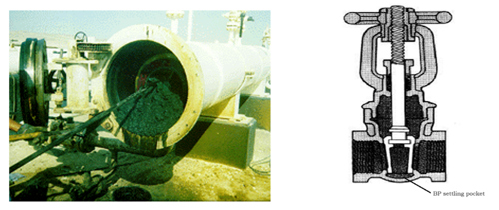
FIG. 1. Black powder accumulation in the valve body.
RECOMMENDED PRACTICE AND SOLUTION FOR EXISTING SYSTEMS
There are two techniques to reduce black powder and other residuals accumulating in the valve body.
Technique 1: Drain the residuals/black powder outside of the piping system. This action can be achieved by accessing the lowest spot of the valve through any drain connection to the blowdown system—e.g., a gate or ball valve bottom drain or nearby drain.
This should be done before stroking the valve to its final position to avoid compacting the black powder, forming a rocky state. A closure element (gate/disc) should be stroked up to 90% of its closure travel. This is to create turbulence and disturb/flush the valve bottom, ensuring a clear bed for the closure element to rest in its tight shutoff position.
Technique 2: Flush residuals/black powder downstream of the valves. In the case where there is no drain point near the valve, the above technique of partial closure can still be followed. However, this should be done for an extended period to allow all particles to travel downstream of the valve. Full closure of the valve should be avoided since it could lead to clogging.
Available solutions for new construction. Valves with an external bottom drain are the simplest and most cost-effective option (FIG. 2). However, precautions should be taken during loading/unloading of the valve to avoid damage to the drain connection.
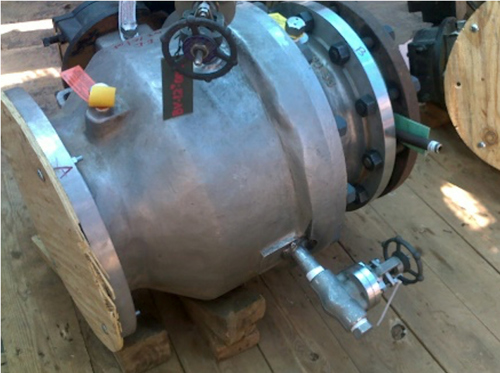
FIG. 2. Valve with a bottom drain connection.
Another option is to use a valve that avoids interaction with the valve's bottom where residuals accumulate (FIG. 3).
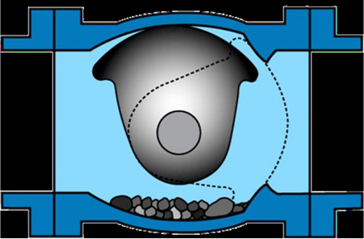
FIG. 3. Residuals accumulating at the bottom of the valve.
Takeaway. This article has briefly reviewed best practices that will help in the optimum selection of isolation valves used in black powder environments, as well as techniques to reduce black powder buildup. This included the above techniques for existing systems and new construction.



Comments