

Haffner Energy receives rapid bookings for CORE100 clean-fuel production units
- Early momentum confirms market appetite for midsize, lower-cost and faster-to-deploy clean fuel production units
Within just one month of its launch, Haffner Energy’s CORE100 program has secured 14 initial reservations, demonstrating strong early market traction for this new industrial model. Customers are drawn to the program’s C-iC units to develop midsize biomethanol and hydrogen projects in particular across Europe.
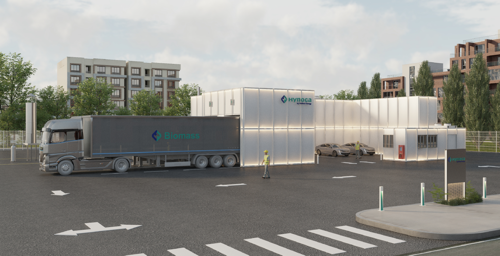
CORE100 is an industrial reservation program for 100 standardized C-iC units, with prices ranging between €1,990,000 and €4,970,000 excluding taxes. It is designed to remove barriers to midsize clean fuel project financing by reducing CAPEX and accelerating development timelines.
Given the limited capacity of the initiative, with production slots allocated over a three-year period, demand is expected to intensify as availability decreases. With more than four months remaining before the close of the reservation period, Haffner Energy considers the program to be on track to reach its goal.
“In today’s context of geopolitical instability and energy insecurity, decentralized midsize clean fuel projects based on local residual biomass are becoming increasingly important. The early ramp-up in reservations confirms both the relevance of this model and the speed at which the market wants to adopt it. By combining security and resilience — through a decoupling from fossil fuels — with economic competitiveness and decarbonization, this standardized range offers a value proposition that is relatively unique in today’s market,” said Philippe Haffner, CEO of Haffner Energy.
CORE100 provides access to three types of C-iC units, capable of producing either:
-
50 kg/h of hydrogen (400 tons per year);
-
1,700 kW of purified syngas for the production of methanol or methane;
-
1,700 kW of syngas for power and thermal energy generation.
The program is currently available in countries complying with ISO standards, the metric system, and a 50 Hz electrical frequency (Europe and North Africa).
Lower CAPEX. Shorter timelines. CORE100 is based on the serial manufacturing of 100 standardized units, enabling:
-
full pooling of research and development;
-
extensive equipment standardization;
-
supplier negotiations based on guaranteed volumes;
-
a significant reduction in execution risk.
The combined benefits of mass production and modularity enable:
-
an estimated CAPEX reduction of more than 50% compared to a stand-alone unit (in addition to the economic benefits associated with modularity, as detailed in the press release dated January 27, 2026);
-
a further 30% to 40% reduction linked to the elimination of heavy civil engineering, resulting in a total CAPEX reduction of up to 65% compared to individual projects;
-
a reduction in project completion times of four to six months compared to a stand-alone unit.
Significantly reduced clean-fuel production costs. Under realistic economic assumptions and without subsidies, the Company's target cost levels are as follows:
-
Renewable hydrogen: approximately €2.34/kg, compared with costs typically exceeding €7/kg for decentralized electrolysis projects
-
Thermal syngas: lower than the cost of energy produced by a conventional biomass boiler
-
Syngas for conversion: competitive for the production of biomethanol or biomethane compared to alternative large-scale solutions.
“The CORE100 program offers a compelling approach to accelerating clean fuel projects. The combination of standardized industrial units, reduced CAPEX, and shorter execution timelines is particularly attractive for developers like us working on biomethanol and hydrogen projects,” said Luiz Filho, CEO of cleanfuels project developer H2Verde.
Production will be launched according to a structured industrial schedule. The reservation period will run until July 30, 2026. Once the program is confirmed, reservations will be converted into firm orders and then launched into production according to the following schedule:
-
15 units between September 15, 2026, and September 14, 2027
-
30 units between September 15, 2027, and September 14, 2028
-
55 units between September 15, 2028, and September 14, 2029.
The earlier customers reserve, the higher their priority in selecting a production slot.
As production capacity will be fully allocated over three years, customers not participating in the program may need to wait until after 2030 to access this type of unit.

Comments