


Charting the widening impact of the Iran crisis on energy markets
The repercussions of the ongoing U.S.-Iran war are being felt across the world, with U.S. fuel prices, European natural gas costs and Asian tanker freight rates all jumping sharply since strikes began at the weekend.
The transmission of market jitters through the shipping, fuel and power sectors illustrates how interconnected global energy markets remain, despite the push for more home-grown energy supplies and greater energy security in recent years.
Here's a breakdown of key markets that have been impacted since the conflagration started over the weekend, and the main data points to keep track of as the skirmishes drag on and the disruptions to energy product flows potentially worsen.
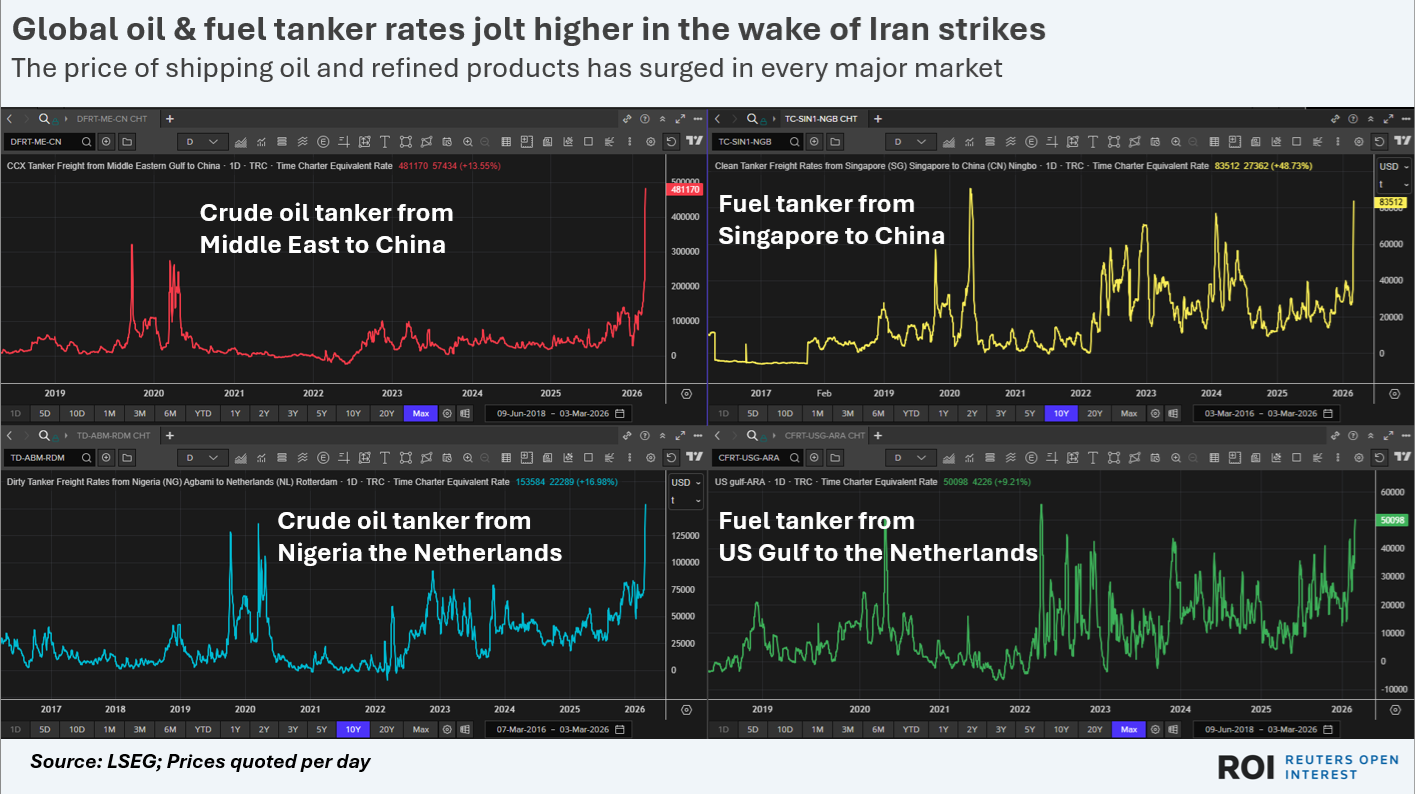
SHIPPING OUT. The global tanker fleet has been one of the sectors hardest hit in the aftermath of last weekend's bombing campaign and the subsequent closure of the Strait of Hormuz.
Around a fifth of global oil, fuel and LNG travels through that well-known maritime chokepoint, so virtually all carriers of energy liquids have taken a hit from the traffic disruptions and the subsequent scramble to reroute shipments.
(click image to enlarge)
Quotes for shipping crude oil from the Middle East to China have captured the ferocity of the logistics crunch, with the cost of chartering a very large crude carrier (VLCC) jumping from around $120,000 a day last week to more than $450,000 a day since fighting erupted.
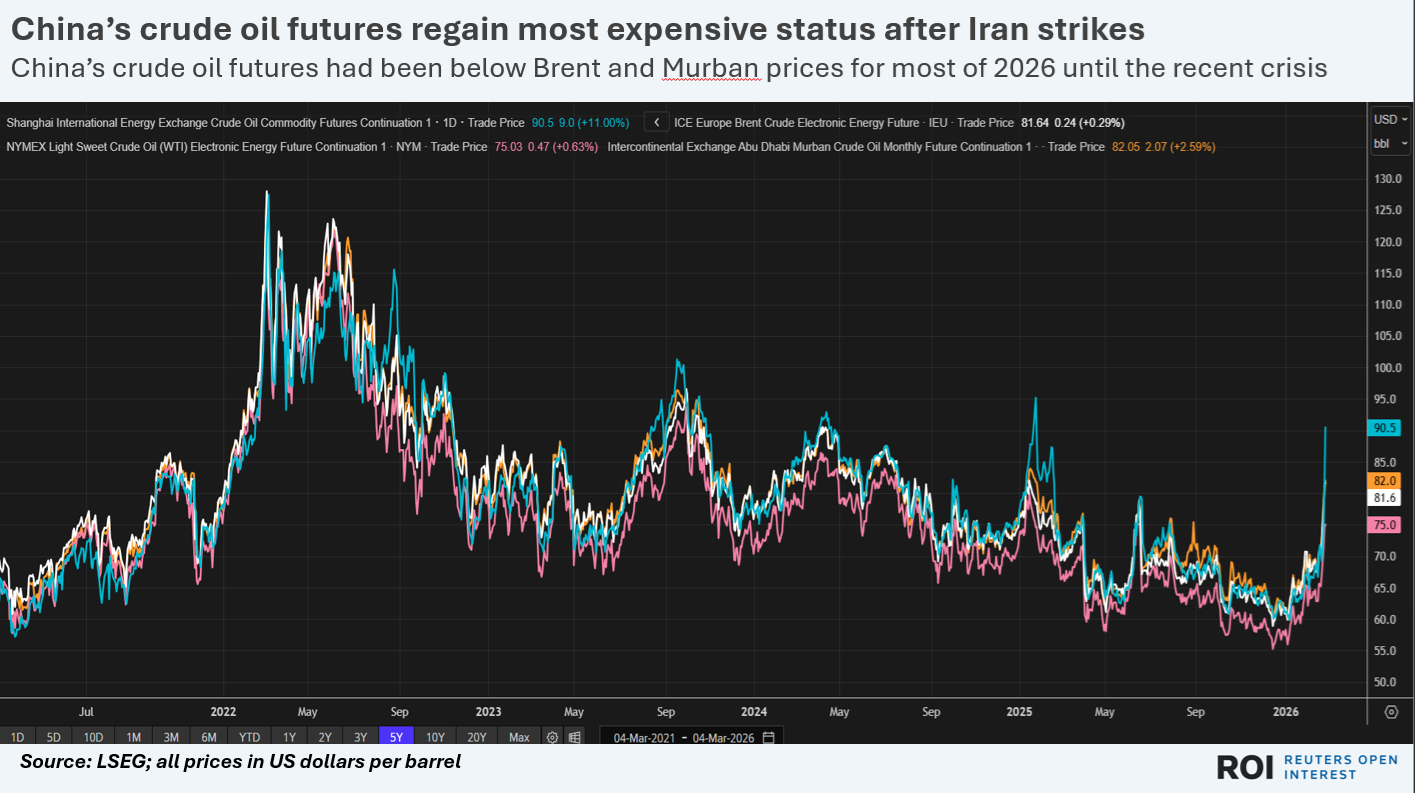
China is the world's largest oil importer and domestic crude oil futures prices have also surged this week, rising by 31% since last Friday compared to 12% increases in Brent and U.S. crude oil futures over the same period.
(click image to enlarge)
However, it's not just China that has been impacted by the supply chain bedlam.
Fuel tanker rates from Singapore to Japan and from the U.S. to Europe have also jumped higher this week in response to the growing tightness of global energy supplies and a more panicky mindset among all oil and fuel buyers.
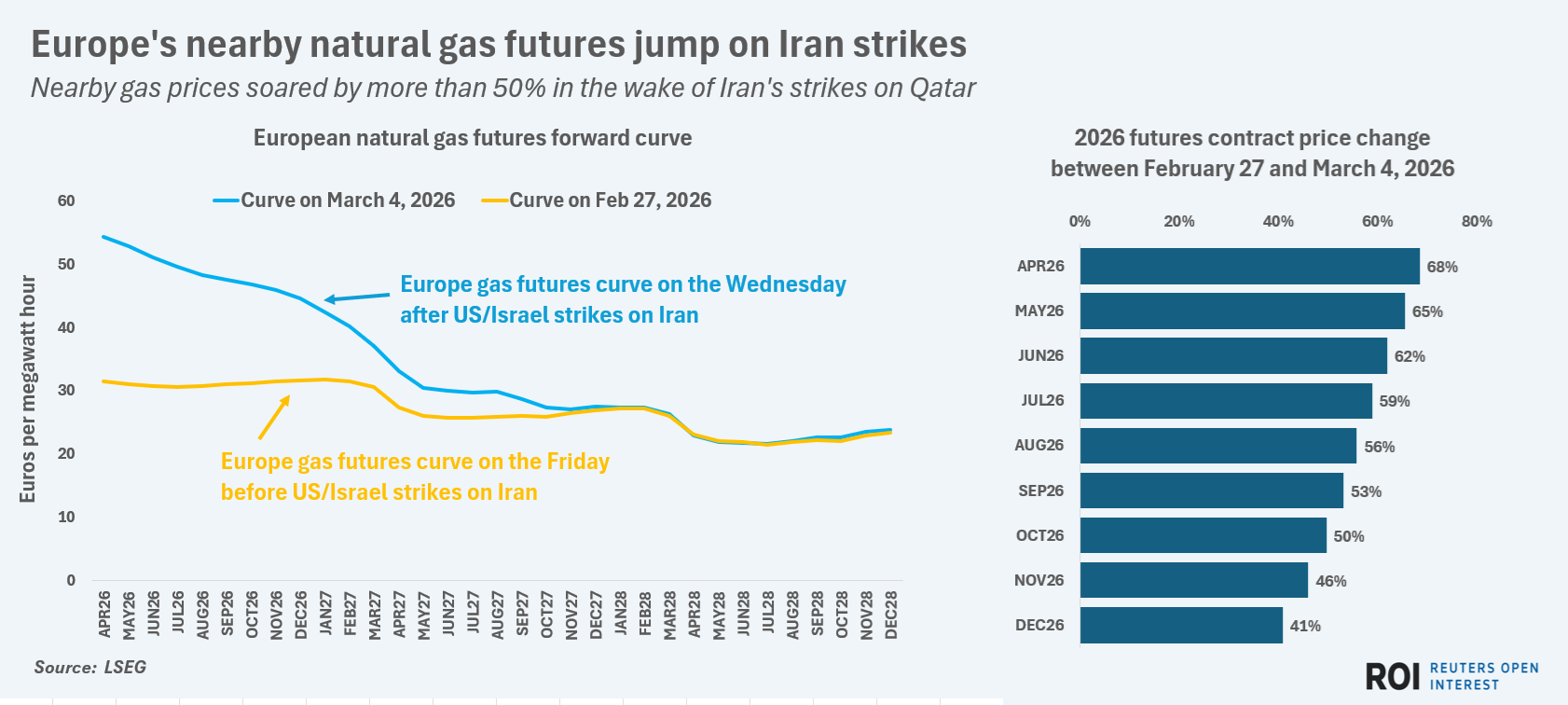
GAS AND FUELS. Europe's natural gas markets have also recorded steep price gains this week as several European nations remain heavily reliant on gas for power and industry and yet have depleted local gas stockpiles to multi-year lows in recent months.
(click image to enlarge)
Benchmark European natural gas prices have bolted sharply higher in response to the news that Qatar has paused loadings of liquefied natural gas since its main gas liquefaction facilities were hit by Iranian drones over the weekend.
Nearby European gas futures contracts have soared by close to 70% since Friday, while even prices for December 2026 have gained around 40% this week on expectations of an enduring tightness in global gas supplies while Qatar remains offline.
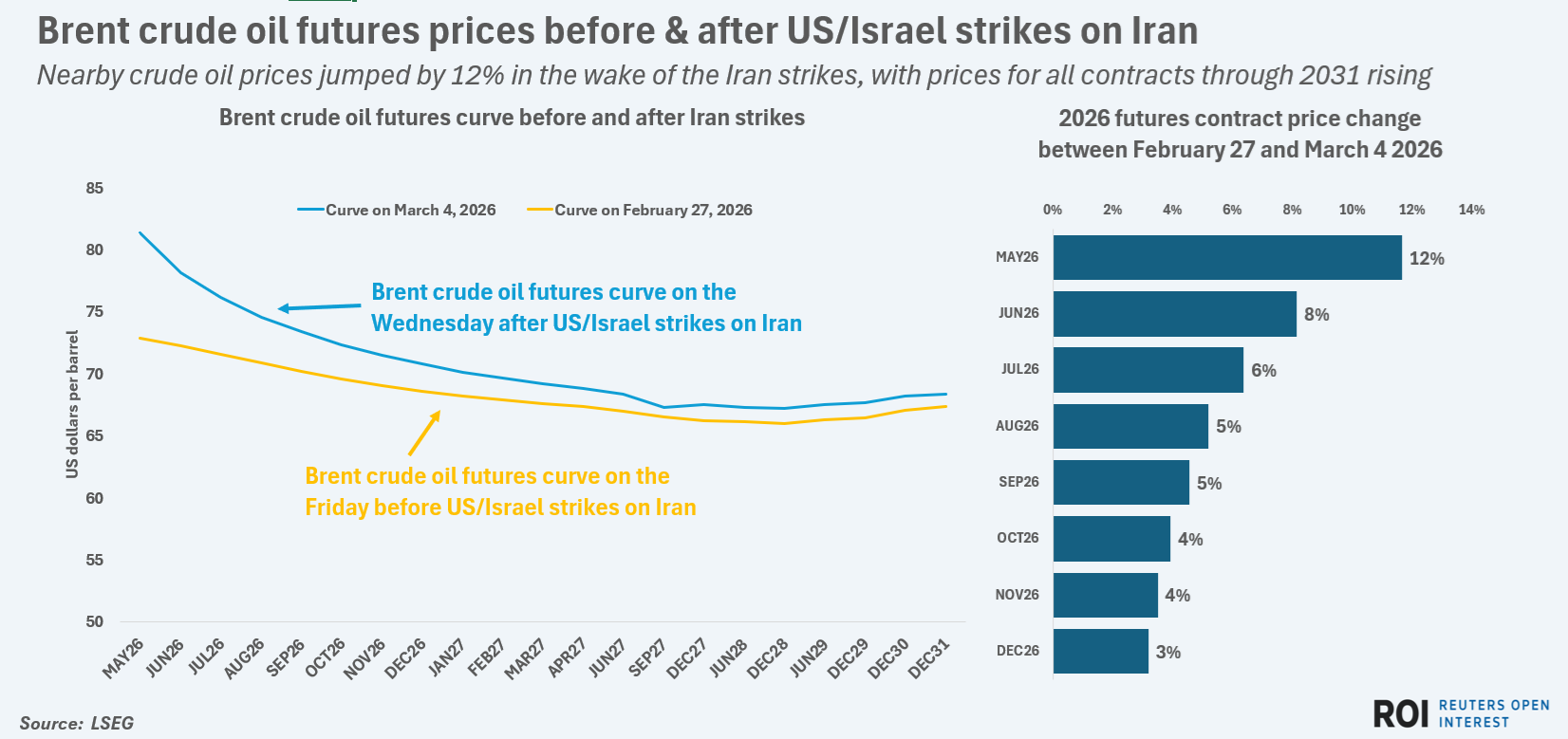
Forward prices for the global benchmark for crude oil - Brent - have also lurched higher this week, with nearby May futures rising by around 12% since Friday and year-end prices rising by around 3%.
(click image to enlarge)
Growing worries about how long shipping channels from the Middle East will remain clogged have served to boost sentiment across all major oil markets, especially as storage tanks across the Middle East rapidly fill up and force producers to consider cutting output if they can't resume exports soon.
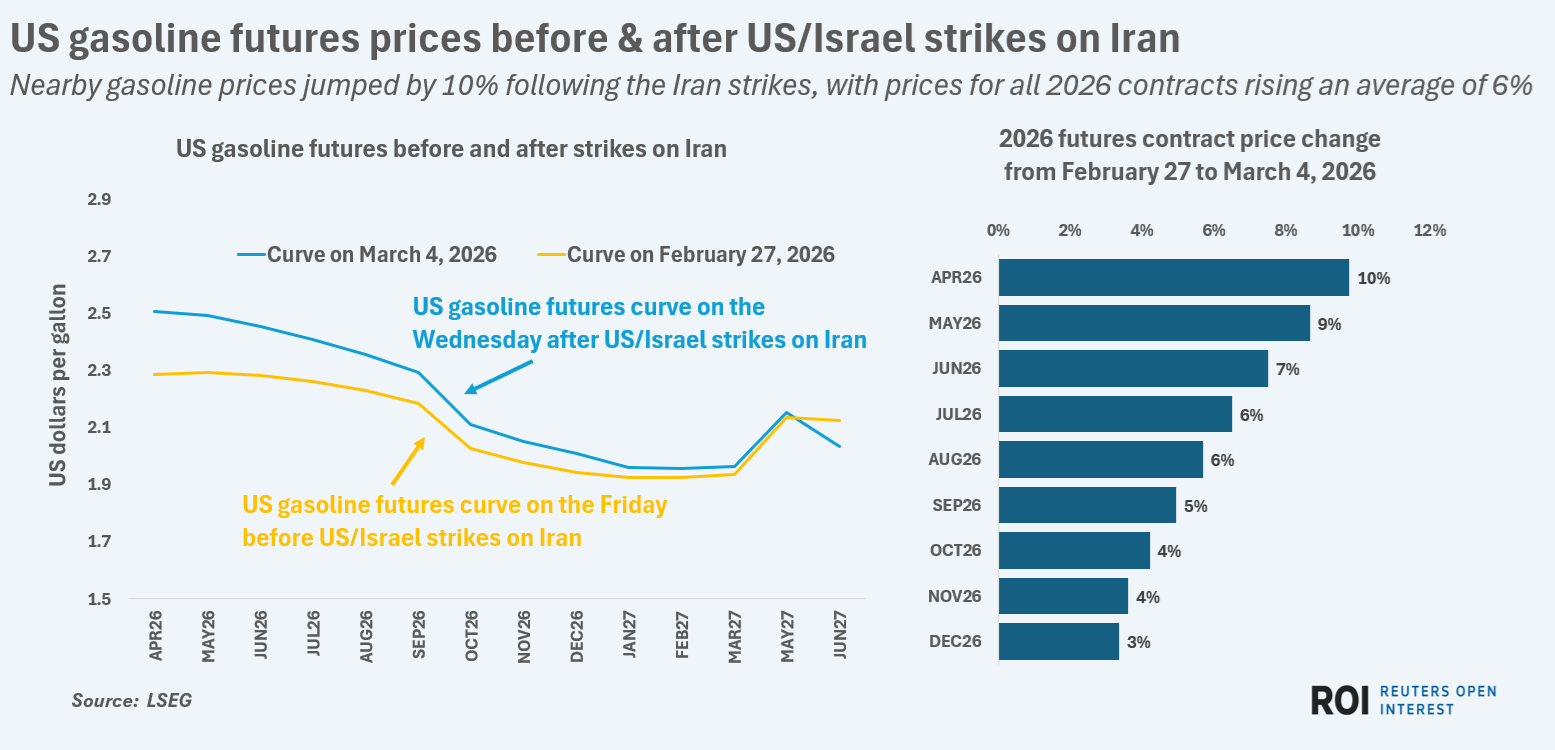
U.S. gasoline futures prices have followed a similar trend, even though the U.S. is a major crude oil producer and exporter.
(click image to enlarge)
Nearby U.S. gasoline contracts have climbed by around 10% since late last week and year-end prices are up by 4% as fuel distributors responded to the outlook for tighter global oil supplies and higher logistics costs.
U.S. President Trump has announced steps to restore ship traffic in the Middle East in an effort to turn energy costs lower again for U.S. consumers, including a proposal for the U.S. Navy to escort tankers through the Strait of Hormuz.
However, with the U.S., Israel and Iran all still stepping up their bombing efforts and widening the damage done to energy and logistics channels across the Middle East, energy prices are likely to continue stretching higher for the near term at least.
That means even steeper gains in power, fuel and freight prices could emerge in the weeks ahead in all major energy markets.
The opinions expressed here are those of Gavin Maguire, a columnist for Reuters.



Comments