


Million Air and Avfuel bring SAF to Austin, Texas (U.S.)
Luxury FBO Million Air Austin (KAUS) and leading fuel supplier Avfuel Corp. have come together to boost sustainable aviation operations at Austin Bergstrom International Airport with the addition of sustainable aviation fuel (SAF).
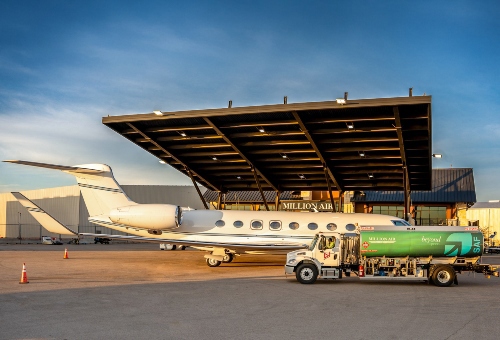
The SAF provides a meaningful solution for operators seeking to reduce lifecycle greenhouse gas emissions from flight operations. This marks the first SAF location in Texas for both companies, offering a consistent supply of SAF specifically for the airport’s business and general aviation traffic.
“Austin is a thriving, business-centric city that also deeply values environmental responsibility,” said Roger Woolsey, CEO of Million Air Interlink. “Bringing SAF to Million Air Austin is about giving our customers meaningful options that align with both their travel needs and their sustainability goals. At Million Air, we believe sophistication and responsibility go hand-in-hand, and this step in our Beyond Green initiative reflects our commitment to making choices that support both our customers and our planet.”
“The Million Air team has been an exceptional partner to work with in expanding sustainable fuel solutions,” said Mark Haynes, Avfuel’s vice president of sales. “We’re proud to collaborate with them to establish our first consistent SAF-supplied location in Texas and help further their corporate initiatives on sustainability.”
The SAF, originating in Texas, has a targeted blend percentage of 30% neat SAF to 70% traditional jet fuel. For every 8,000-gallon truckload of fuel, the SAF provides a 19 metric ton reduction in carbon emissions over the fuel’s lifecycle compared to petroleum-based jet fuel. This is equivalent to the amount of carbon sequestered by 19.1 acres of U.S. forests per year. In its neat (pre-blended) form, SAF has the potential to reduce greenhouse gas emissions by up to 80% compared to traditional jet fuel.


Comments