

deugro delivers final shipment for INEOS Project One
12/2/2025 12:00:00 PM
With the final delivery of critical components for Europe’s most sustainable ethane cracker construction project, deugro successfully delivered a total of 85,500 cubic meters to the project site at the Port of Antwerp.
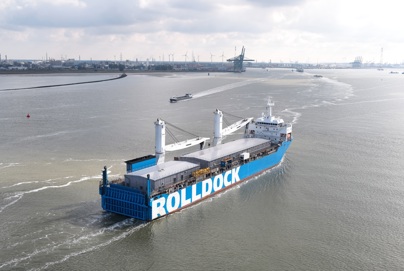
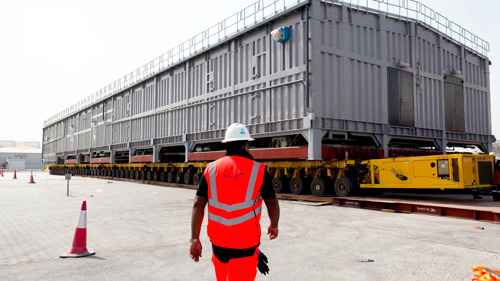
The first 52,600 cubic meters of cargo—ten oversized and up to 738-metric-ton, up to nearly 50-meter-long storage bullets— have been delivered by two shipments from China. Following this, a further 33,000 cubic meters were shipped by three charters from UAE and Oman. They encompassed a variety of oversized and heavy lift (OSHL) components, such as an over 331-metricton, 32 × 15 × 6.8-meter marine control building; a 404-metric-ton, over 25 × 14 × 7-meter local equipment room building; several substation units up to 438 metric tons and 35.9 × 12.6 × 7.2 meters; and a 338-metric-ton, almost 30-meter-long local equipment room building. The most impressive unit—a 1,040-metric-ton, over 67 × 16 × 7-meter substation—was shipped on the final vessel, the Rolldock Storm.
Given such dimensions and weights involved, each movement demanded meticulous planning and operational precision. Strict project milestones imposed extremely tight shipping schedules. Simultaneously, the requirement for a specific berth at a persistently congested loading port necessitated intense coordination with port authorities. Additional challenges included adverse weather conditions and the mandatory rerouting of all vessels via the Cape of Good Hope due to the Red Sea crisis. All in all, a variety of challenges had to be addressed simultaneously.
For a safe delivery via a combination of deck carrier, heavy lift and semi-submersible vessels in accordance with the project schedule and budget, as well as the supplier’s and the construction site’s individual requirements, deugro UK, acting as project control tower, assembled and orchestrated an experienced cross-disciplinary team of project managers, transport engineers and chartering experts from the UK, the Netherlands, Belgium, Germany, China, UAE and Oman.
To ensure maximum safety, most components were loaded via RO/RO, requiring intense planning—particularly concerning the SPMT configuration and the ramping system on the quay side. The 67-meter substation alone necessitated the mobilization of two SPMT trains with 50-axle lines each and nearly 75 meters of quay packing to create a suitable ramp for safe transfer.
In addition to the main cargo, the final vessel was loaded—on short notice—with special self-loading equipment: a 66.04 × 19.1 × 4.25-meter barge. Consequently, cargo had to be stowed partly on the vessel’s tween deck and simultaneously on the secured barge below. This required specialized loading, stowage and securing plans, including dual ballasting calculations.
“Thanks to the excellent collaboration with all partners, we were not only able to ensure the successful delivery of these complex and sensitive cargo units on schedule and in accordance with the highest safety standards. In close teamwork with the client, we were also able to successfully utilize the vessel’s substantial storage space, which had unexpectedly become available at short notice on the second ocean voyage, by flexibly collecting and loading over 6,000 cubic meters of additional cargo from the client—thereby avoiding significant dead freight costs.” said Ben Cunnington, Country Manager at deugro UK.


Comments